
2026-10-13 · Dave Soto
How Dust Storms Clog HVAC Filters In Las Vegas Homes
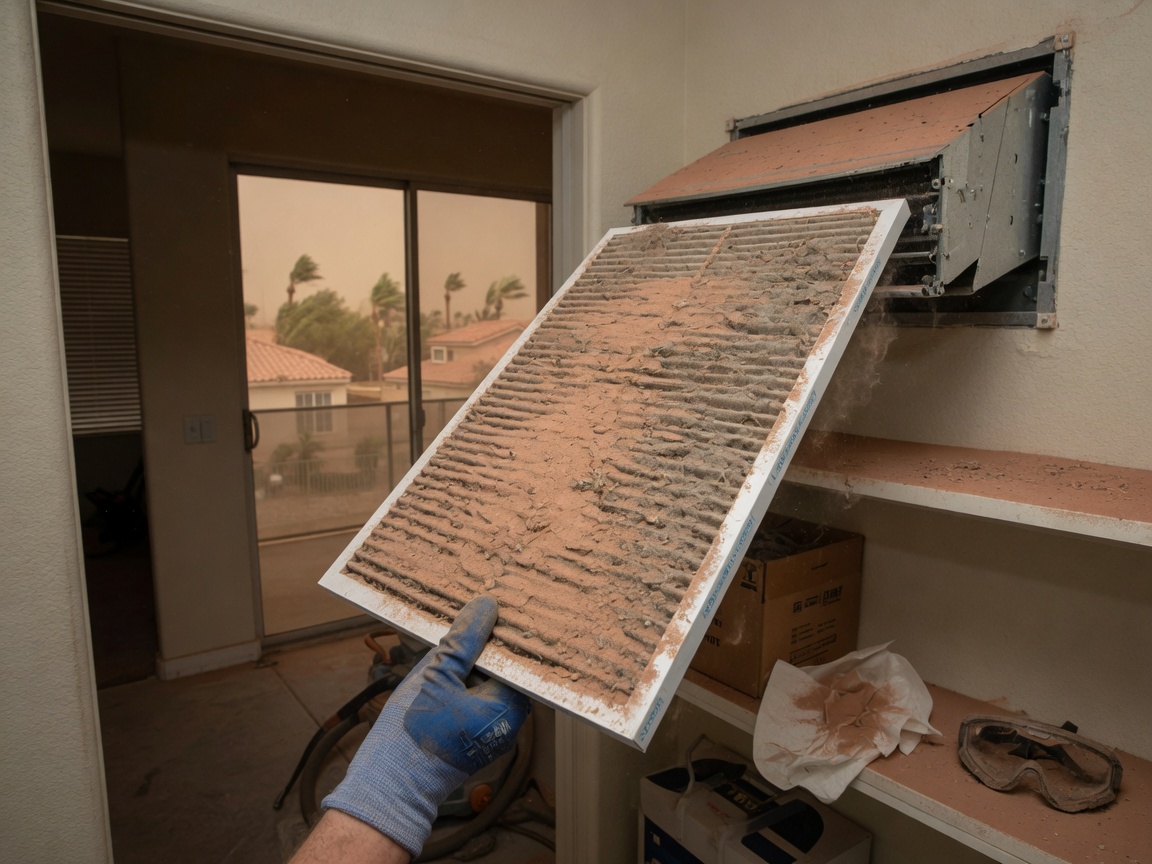
Dust storms in Clark County can clog a standard 1-inch HVAC filter in 2-4 weeks during peak summer wind activity, cutting airflow and forcing the system to work harder in the hot desert climate. These events carry fine silt and sand from surrounding desert terrain into homes across Enterprise, Summerlin South and Spring Valley, where single-story tract homes from the 1990s and 2000s often have return vents placed low to the ground. The particles bypass loose cabinet seals and settle on the evaporator coil, raising static pressure and shortening filter life compared with milder climates. Homeowners notice reduced cooling capacity and higher energy use once the filter reaches 50-70% blockage.
How Desert Winds Carry Dust Into Las Vegas Homes
Summer wind patterns in Clark County lift loose topsoil from undeveloped land around the city and push it through neighborhoods like Centennial Hills and Lone Mountain. These gusts commonly reach 30-40 mph, driving particles smaller than 10 microns deep into HVAC return ducts. Homes near the Las Vegas Strip or Arts District experience added dust from construction sites and vehicle traffic on surface streets. The fine silt passes through standard fiberglass filters within days, while pleated media lasts slightly longer before pressure drop becomes noticeable. Mild winters reduce heating demand but do nothing to clear accumulated material before the next storm season begins.
Filter Loading Rates During Peak Storm Periods
A 16x25x1 filter in a typical 2,000-square-foot home in Summerlin South can gain 0.3-0.5 inches of water column restriction after one strong haboob. Systems serving larger properties in Enterprise see faster loading because longer duct runs collect more airborne material before it reaches the filter. Technicians often find the pleats caked on the upstream side while the downstream face remains relatively clean, confirming the dust entered from outside rather than from indoor sources. This pattern repeats across Henderson and North Las Vegas whenever regional winds align with dry lake beds to the north.
Effects on System Components Beyond the Filter
Once airflow drops, the evaporator coil collects the same silt that passed the filter, reducing heat transfer and raising head pressure on the compressor. In homes with older ductwork common in Sunrise Manor, the added resistance can pull unconditioned air through leaks, increasing humidity load during the already extreme summer months. Blower motors run hotter under these conditions and may reach thermal limits sooner than units in less dusty parts of the region. Regular inspection of the coil surface after storms helps prevent the gradual efficiency loss that shows up on monthly electric bills.
Homeowners in Summerlin South can reduce storm-related loading by checking filters every 10-14 days between May and September. HVAC maintenance visits scheduled before wind season allow technicians to seal cabinet gaps and verify static pressure readings under load. When filters reach replacement stage, upgrading to a 2-inch media cabinet often extends service intervals without restricting airflow. Air duct cleaning removes the fine layer that settles inside trunks and branches after repeated storms, restoring designed airflow. Readers exploring seasonal energy patterns may also find value in the article Energy Use Patterns For AC Units In Summerlin Neighborhoods.