
2026-10-13 · Dave Soto
Energy Use Patterns For AC Units In Summerlin Neighborhoods
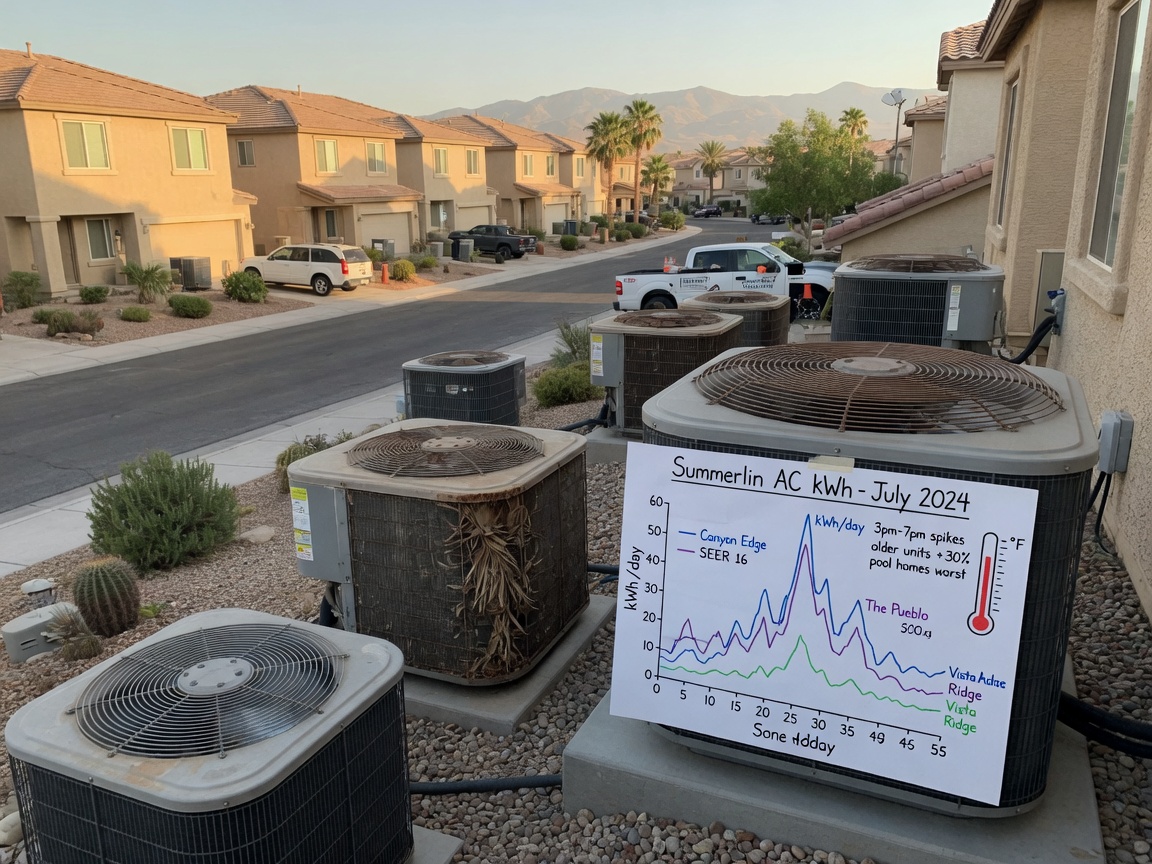
AC units across Summerlin neighborhoods run longer each day than those in many other Clark County areas because afternoon temperatures frequently stay above 105 degrees from June into September, forcing systems to work against both outdoor heat and the stored warmth in stucco and tile homes built on larger lots.
Climate Patterns That Shape Daily Runtime
Summerlin sits at a slightly higher elevation than the Las Vegas Strip, yet the same hot desert climate dominates. Morning temperatures often start in the 80s and climb past 100 by early afternoon, keeping compressors engaged for eight to ten continuous hours. Evening drops into the 70s allow brief cycling, but the overall daily load stays elevated because Red Rock Canyon to the west funnels hot air into the community. Homeowners notice the difference most in July and August when the Sphere and High Roller areas downtown report similar spikes yet Summerlin's newer subdivisions lack the shade provided by older tree canopies in the Arts District. These consistent patterns mean systems sized for average Las Vegas loads still face extended duty cycles that increase monthly kilowatt-hour totals.
Home Construction Details Affecting Efficiency
Most Summerlin residences built after 2000 feature two-story stucco exteriors, radiant barriers in attics, and dual-pane windows, yet many still draw more energy than expected because of large south- and west-facing glass exposures common in master-planned sections near Summerlin South. Single-story homes in older pockets of the neighborhood often have lower ceilings and better attic insulation, shortening runtimes by 10 to 20 percent compared with newer two-story models. The soil here is sandy and drains quickly, so slab foundations stay cooler than those in nearby Enterprise, but the same dry conditions allow heat to radiate upward from driveways and patios into first-floor living spaces. These construction realities create measurable differences in energy draw between adjacent streets.
Maintenance Impact on Seasonal Consumption
Systems that receive HVAC maintenance before June typically show steadier cycling and lower overall energy use because clean coils and properly charged refrigerant lines remove heat more effectively during the longest days. Neglected units develop restricted airflow that forces longer runtimes, especially in homes near Lone Mountain where dust from surrounding desert lots accumulates faster. Replacing a worn blower motor early, as outlined in related cost discussions, prevents the gradual efficiency loss that compounds across multiple summers. Homeowners who schedule service in spring report fewer days when the thermostat must be lowered manually to maintain comfort.
Usage Habits and Thermostat Behavior
Residents who set thermostats at 78 degrees during peak afternoon hours and raise them to 82 after sunset see flatter daily energy curves than those who keep constant 72-degree settings. Smart thermostat installation helps by automatically adjusting for the rapid evening cooldown typical in Summerlin, yet many homes still rely on older manual models that ignore these micro-climate shifts. Families with pools or home offices often override schedules, creating secondary spikes between 4 pm and 8 pm when outdoor temperatures remain high. Tracking these habits against actual utility data reveals that small schedule changes produce more noticeable savings than major equipment upgrades in well-built Summerlin homes.
Preparing Systems Before Peak Heat Arrives
Checking filters monthly and confirming attic insulation levels before the first 110-degree day helps flatten the steep energy rise that occurs once temperatures lock in above 100. The article on pre-heat-wave checks provides a practical checklist tailored to Clark County conditions. Homes near the boundary with North Las Vegas experience slightly stronger winds that can push more dust into outdoor coils, requiring earlier attention. Addressing these details in May or early June keeps daily runtime closer to the lower end of the neighborhood range rather than the extended cycles seen in units that enter summer already compromised.